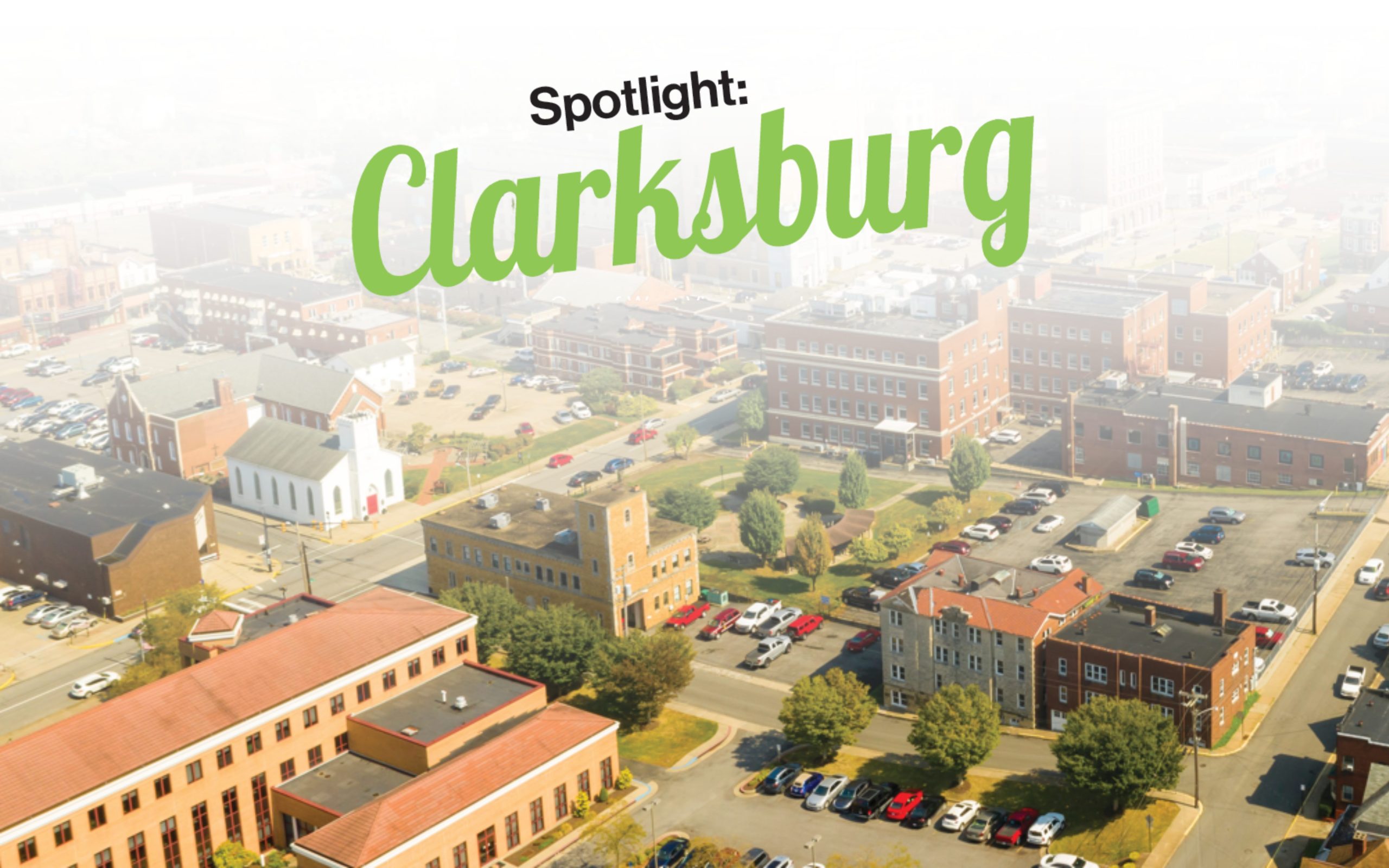
Located at the junction of Elk Creek and the West Fork of the Monongahela River, Clarksburg is one of West Virginia’s oldest cities. Named for Revolutionary War hero George Rogers Clark, the town was chartered by the Virginia General Assembly in 1785, some 78 years before the Mountain State was officially formed.
Clarksburg’s early economy centered around such small industries as a gristmill, a tannery, a pottery and saltworks. Poor transportation slowed development until the 1830s, when the Northwestern Turnpike was built from Winchester to Parkersburg. The arrival of the Baltimore & Ohio (B&O) Railroad in the mid-1850s opened the county to development. During the Civil War, the B&O made Clarksburg an important supply base with more than 7,000 troops at one point. Confederate raiders struck the region but did not take the city.
The availability of natural resources, coupled with easy access to rail facilities, attracted manufacturing to Clarksburg, including chemical plants, brickworks, potteries, foundries and machine shops. Those manufacturing jobs attracted thousands of immigrants, with Italians being especially numerous. Clarksburg pays tribute to them with the Italian Heritage Festival, held each Labor Day weekend. The fun-filled event has drawn thousands of visitors to Clarksburg each year since 1979.
Early 20th-century Clarksburg boasted eight banks, three hospitals and several fine hotels, including the elegant seven-story Waldo, which opened in 1909. By 1929, Clarksburg had reached its peak population of 35,115. But plant closings in the 1980s hit the Clarksburg economy hard.
Expansion in the government and technology sectors began in the 1990s, including the relocation of the FBI’s Criminal Justice Identification Division to Clarksburg which today employs more than 3,600 people.
Complementing this massive federal tech sector is a robust network of corporate, healthcare and engineering anchors that drive the modern local economy. Clarksburg serves as the headquarters for Hope Gas Inc., a major natural gas utility managing distribution across more than 30 West Virginia counties, while energy leaders like Antero Resources maintain a significant corporate office footprint nearby in Harrison County’s White Oaks business corridor. Prominent professional firms like The Thrasher Group provide hundreds of engineering and architectural jobs in the area, and the city’s healthcare infrastructure is equally vital, anchored by the Louis A. Johnson VA Medical Center and the nearby WVU Medicine United Hospital Center campus. Furthermore, the city sits adjacent to the Mid-Atlantic Aerospace Complex at the North Central West Virginia Airport, where global aviation leaders like Pratt & Whitney, Aurora Flight Sciences and MHIRJ Aviation Group fuel a highly skilled regional workforce.
Clarksburg offers visitors a variety of attractions that highlight its rich history and culture. If you love seeing historic buildings when you travel, be sure to add Waldomore to your Clarksburg itinerary. The Neoclassical brick mansion was originally built as the residence of a Virginia state senator and later operated as the city’s public library.
To get an idea of Clarksburg’s history, head on over to the Clarksburg History Museum. Its ever-changing exhibits display historic relics, old photographs, newspaper clippings and so much more, from old currency to fossils, from Amish display cabinets to antique glassware. Veterans Memorial Park has all the outdoor activities you could ask for: an amphitheater, a fitness trail, various picnic spots, a spacious kid’s amusement area, tennis courts and a skate park. If you’re traveling with your furry friend, make sure to visit the on-site dog park.
The Robinson Grand Performing Arts Center — originally opened in 1913 and restored in 2018 — hosts touring shows and local productions, including the Born and Bred Concert Series highlighting West Virginia musicians.
Clarksburg was the birthplace of a number of prominent West Virginians, among them Confederate Gen. Stonewall Jackson; John W. Davis, U.S. solicitor general, ambassador to Great Britain and Democratic nominee for president in 1924; and Cyrus Vance, secretary of state under President Jimmy Carter.
Today, Clarksburg is seeing significant transformation, driven by massive utility upgrades, large-scale energy projects and downtown revitalization. Key initiatives include the $1.2 billion Wolf Summit Energy plant, comprehensive neighborhood revitalization plans and ongoing efforts to create arts and entertainment districts.
James E. Casto is a freelance writer living in Huntington.